This blog has moved to a new site. Please visit slcocouncil.com

Tuesday, October 13, 2015

Criminal Justice reform is needed

Ever since I took office in January of 2014, criminal justice reform has been at the forefront of nearly every conversation we have about the budget. Now the county is in a position to either build more pods to house more prisoners or can invest in alternatives to keep low-risk offenders from cycling in and out of jail. Nearly one-third of homeless people are booked into jail in a 12-month period and during that same period the average offender was booked on two new charges and spent an average of three months in jail. The jail has become housing for the homeless and that was never intended to be its use.

The homeless population isn’t the only issue that the jail faces. The mentally ill and those with substance abuse disorders are also a high priority. Data shows that the mentally ill spend twice as long in jail than the non-mentally ill inmate. This presents a huge problem that costs money, staffing, and time that is costly to taxpayers. The bottom line is that our jail is crowded. When the jail opened there was a capacity of 2,000 beds and since that time the population of Salt Lake County has grown by 230,000 people. The Sheriff estimates 7,761 individuals will be released from the jail due to overcrowding this year alone. 

In 1995 taxpayers agreed to pay for the new jail at $9.4 million per year for 20 years. This December the bond will be expired. Normally when a bond is expired that money is sent back to the taxpayer. Instead, this proposal asks taxpayers to continue paying that $9.4 million for the foreseeable future. There would not be an increase to a resident's tax bill, but they would not receive an $18 per year decrease.

In 2014, the Salt Lake County Jail saw a 17 percent increase in the number of new felony charge bookings. The same year, the District Attorney’s office experienced a 12 percent increase in criminal cases brought for screening by law enforcement. The Legal Defender’s Association is similarly seeing increased caseloads. County probation caseloads are too high to provide effective supervision and successful interventions. Nearly 30 percent of the homeless population was booked into jail in a 12-month period. The average offender was booked for two new charges and spent an average of three months in jail. The staggering impact of this “revolving door” at the jail costs the sheriff and jail staff time, money and does nothing to deal with the underlying cause. For those in jail, there are the costs to them personally, to their families and ultimately to the surrounding community. 


 A just-completed independent study by The Council of State Governments Justice Center found:

  • One out of three people on pretrial supervision and one out of two people on county probation do not fulfill the requirements of their supervision.
  • People with mental illnesses stay longer in jail and return more frequently than people without mental illnesses.
Collaboration is occurring between state leaders, the county council, county mayor, county sheriff, county district attorney, county Human Services Department, the Criminal Justice Advisory Council and others to reinvest criminal and social justice dollars more effectively. All are working together to achieve the following outcomes:
  • Reduce incarceration for low level offenders
  • Reduce recidivism by implementing programs proven to work
  • Promote substance abuse and mental health treatment as viable and widely available alternatives to incarceration.
  • Maintain a focus on public safety while looking for opportunities to strengthen prevention efforts.

If this tax extension passes, I would push for a working group made up of the council, sheriff, DA, mayor's office, behavioral health, criminal justice staff, and other stakeholders, to figure out priorities for these funds. I believe it would be irresponsible not to make some drastic changes now to criminal justice. The longer we wait, the bigger the problem becomes, the longer it takes to make changes, and the more expensive it becomes for taxpayers.

Wednesday, October 7, 2015

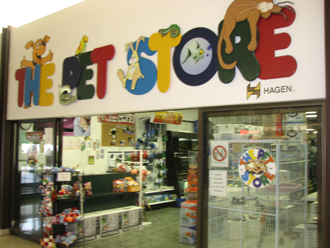
Should government tell businesses what they can sell?

Yesterday during our Salt Lake County Council meeting we discussed a proposed ordinance that banned the sale of dogs, cats or rabbits, unless they are obtained from a shelter. This ordinance was proposed in order to keep "puppy mills" from gaining traction.

I support our "no-kill" animal shelter philosophy in Salt Lake County. I am extremely proud of our animal services division and the great work they do. I abhor puppy mills and I am in favor of humane treatment of our animals.

I was the lone "No" vote on this ordinance, however.

The Deseret News article reads:
The County Council passed the ordinance 6-1, with Councilwoman Aimee Winder Newton casting the lone dissenting vote.
"I'm not a big fan of government imposing undue regulations on businesses, especially when it's a regulation for regulation sake," Newton said. "We aren't having an issue with this currently in unincorporated Salt Lake County, so I'm having a hard time wrapping my arms around passing an ordinance when we really don't know who it might affect in the future."

According to the ordinance sponsor, we currently do not have any pet stores that are having a problem with this. So now government is imposing a law, that is really not needed. At least not right now. Maybe not ever.

I don't believe government should add unnecessary regulations to businesses. Government definitely has a legitimate role to play in growing the economy. We should create a level playing field for businesses and enforce contracts. But this ordinance gave me heartburn, not because I don't love doggies and kitties, but because we are actually telling a business where they have to obtain animals that they are selling.

What if a shelter doesn't have a certain kind of dog available and a store owner has customers who wants to buy? What if my neighbor's dog had puppies that they want to give to a pet store to sell? Now we are telling people what they can and can't do. We are increasing the burden on shelters (funded by taxpayers) because people will have to give their pets to an animal shelter instead of allowing a pet store to sell their animals.

This is unnecessary. Government should not be passing "message laws" that only place more burden on private enterprise. Especially when the problem trying to be solved (puppy mills) is not even a problem in Salt Lake County. I do support educating the public on this issue through a resolution. It is good to encourage animal adoptions through a rescue organization or shelter.

Wednesday, September 23, 2015

Community Preservation vote is around the corner!

Photo taken by Laura Seitz, Deseret News
After decades of annexations, which created declining tax base and uncertainty in using taxpayer dollars for infrastructure and economic development, Salt Lake County officials went to the Legislature last year to create a new form of government – metro townships. Senate Bill 199 also allowed for an election this fall so residents could determine for themselves the kind of government they want in their area.

Ballots will be mailed at the beginning of October and five townships (Magna, Kearns, Millcreek, White City, and Emigration Canyon) will decide if they want to become a city or a metro township. Copperton will decide to be a town or a metro township. Other unincorporated “islands” will decide if they want to stay unincorporated or annex to an adjacent city. 

We all understand what a city is – there are many cities in Salt Lake County with different forms of government. The main difference between a city and a metro township is that a city can charge franchise taxes and property taxes, if elected leaders so choose. Both forms of government will have five elected officials to represent the residents of that community. They both could continue to share sales tax revenue with other townships, cities, unincorporated islands, and parcels of land such as the canyons and Kennecott. (Kennecott will not be in the municipal services district, but the county council intends to forward those sales tax funds to the municipal service district.) With a city, the newly elected officials will have six months to opt out of sharing revenues and services with the municipal services district. With a metro township, they would continue to share revenues/services if voters vote “Yes” on the second ballot question to stay in the municipal services district. If a city or metro township is not in the municipal services district, they would need to self-provide or contract for their own services.

The municipal services district (MSD) is a local service district. It would be governed similar to Unified Police Department, Unified Fire Authority or Wasatch Front Waste and Recycling District.
Those who choose to stay in the MSD will share sales tax revenue and pay for public works, animal control, and the other municipal services currently provided by Salt Lake County. Doing it this way allows elected representatives from each of the townships, cities and unincorporated areas to sit on the board and make the budgetary and servicing decisions.

Some have asked what the impact to taxpayers would be. If a newly created city or metro township opts to stay in the MSD, tax decisions will be made by MSD board comprised by representatives from member communities. If they do not participate in the MSD, then the newly elected leaders would make taxing decisions. Either way, the decisions of these elected representatives could result in changes to your taxes. The future will be in the hands of elected officials in your individual communities, which is why it’s important for residents to be involved in this ballot initiative AND future elections of council members, who will represent them directly.

All residents would still receive the same services for police, fire and sanitation, except for those in the “islands” that choose to annex to a neighboring city.


For years our unincorporated areas have been chipped away through annexations when neighboring cities have cherry picked revenue-producing areas. This has created a lot of instability as sales tax revenues are also taken away when commercial areas are annexed. It has made county leaders hesitant to put taxpayer dollars in a community’s infrastructure or economic development for fear that a neighboring city may take it away. SB 199 or “Community Preservation” is all about giving residents local representation and self-determination so communities can re-invest and continue to be a great place to live.  For more information, see slco.org/community-preservation.

Thursday, September 3, 2015

Tax dollars need to be spent wisely on art

(Photo credit: Scott Sommerdorf | The Salt Lake Tribune)
Recently the Salt Lake Tribune did a story about the county council discussing funding for art in new county buildings. Our current county ordinance says that up to 1 percent of a building budget may be allocated for art.

I struggled with this when we were discussing an open space bond. If we are asking residents to pay for open space, parks, trails, and recreation through a general obligation bond, I want to make sure those dollars stretch as far as possible for those particular uses.

I believe there is community value in having nice buildings and public art. Art and culture in a community enhance education, improve quality of life, and attract businesses who are looking for a great place to locate employees and grow.

But should there be a 1 percent art allocation for every county building? I don't believe so.

Right now this ordinance is interpreted as a hard and fast rule and the full 1 percent is spent, even in non-public buildings. (The Salt Lake County Fleet Building is a prime example.) When future county buildings are built, we need to use a common sense approach and allocate art funding based on public use.

I support having art in our libraries, senior centers, and other places where it benefits the public. We want to have nice buildings that enhance a community. Even in those instances, 1 percent may be too much, depending on the project. I believe we need to take it on a case-by-case basis.


Tuesday, August 11, 2015

No agreement reached with Omni on convention hotel

Today Salt Lake County released this statement on the convention hotel deal with Omni. I support Mayor McAdams in this decision and agree that we need to make sure tax dollars are invested wisely.

 
Salt Lake County, UT—Mayor Ben McAdams announced today that he is walking away from a proposed contract with Omni to develop a convention headquarters hotel adjacent to the Salt Palace Convention Center, after nine months of negotiations. McAdams said the company’s proposed financial terms during the last month of talks became too costly to Utah taxpayers.
 
McAdams said the development of a convention hotel is an important part of growing the county’s convention business, but Omni was asking for too much in public participation.
 
“I’m disappointed that we could not get to ‘yes’ with Omni, but it reached a point where they were asking for too much in public financing which would benefit their bottom line, at taxpayer expense,” said McAdams.
 
The process to develop the convention hotel was launched in 2014, with passage of legislation that provided post-performance tax incentives refunded to the hotel owner after project completion for the construction and maintenance of public spaces including convention meeting rooms, public parking and other public amenities. McAdams said that Omni’s original proposal indicated they would use the incentive package to develop a convention hotel and additional public meeting space. Last November, a 13-person committee reviewed the proposal and recommended that the county move forward with negotiations on project terms. By mid-July, McAdams said Omni wanted that incentive and then some, in the form of public grants and cash advances.
 
McAdams said another sticking point involved an agreement with hotel owners to block rooms for citywide conventions at the Salt Palace. While willing to “technically” block rooms, McAdams said Omni wouldn’t agree to the room block market rate protection that was set forth in the original request for proposal (RFP) and is typical for a convention headquarters hotel. Without room rate protection, McAdams said Omni could effectively get out of the agreement by offering above-market room rates not acceptable to event sponsors. McAdams said providing the incentives to the private hotel owner and then ultimately not having a viable room commitment was not acceptable to the county.
 
“I strongly believe in this private hotel development and its economic value to the state, but not at any cost. Salt Lake County is a great place to invest, with a strong, vibrant economy. We just need to find a hotel developer that understands what an opportunity this is, and wants to negotiate a fair deal,” said McAdams.
 
He said the county plans to reissue the RFP and stands ready to work with new development partners.

Monday, August 10, 2015

Position statements needed for Community Preservation voter guide

With the passage of SB 199 —Community Preservation—residents of the unincorporated County will have the opportunity to participate in a historic election this November to decide their form of government. In preparation for this election the County and community leaders are preparing a number of educational materials to help voters make an informed decision.  One of these educational pieces will be a voter guide which will include position statements from community members on the ballot questions.

The County is now soliciting position statements from community members to be considered for publication in this voter guide.  Below are guidelines to be followed for all position submissions.  All position statements must be submitted by 5pm on August 31st, 2015 and should be submitted to ktrevino@slco.org.

Township Position Statements
Township (Millcreek, Copperton, White City, Magna, Kearns, Emigration) position statements will be accepted related to the following ballot questions:

  1. Position statement for the township becoming a city
  2. Position statement for the township becoming a metro township
  3. Position statement for joining the Municipal Services District
  4. Position statement for not joining the Municipal Services District 

Unincorporated Island Position Statements
Unincorporated island position statements will be accepted related to the following ballot question:

  1. Position statement for remaining unincorporated
  2. Position statement for annexing into the designated city (to learn which city has been designated to appear on the ballot for each island please visit http://slco.org/community-preservation/Maps/)

Position statements must meet the following guidelines to be considered:

  • Submissions must include the author’s full name and not include more than five authors for one submission (anonymous submissions will not be considered)
  • There are no limits to the number of submissions one author may send
  • All submissions must be sent in Word format
  • Submissions should not exceed 500 words (if a submission does exceed this word count the County Council has the authority to shorten the submission)
  • All submissions must be sent by 5pm on August 31st, 2015 to ktrevino@slco.org  
  • Position statement authors do not need to live in the area they are submitting a position statement for
  • Information should be factual and accurate 

After review of all position statements the County Council will select the submissions that will be included in the voter guide.  If you have any questions related to voter guide position statements please contact the Community Preservation hotline number at 385-468-7199 or communitypreservation@slco.org.

Tuesday, August 4, 2015

Council Puts Local Option Sales Tax on the Ballot


Today during our county council meeting, we voted to put the local option sales tax increase on the ballot for the voters to decide.

I voted for this because I believe government closest to the people governs best, and that is in cities and townships. All 16 cities in Salt Lake County passed resolutions asking the County Council to put this issue on the ballot.

In my previous post I outlined some of the other reasons I felt okay about putting this issue on the ballot this fall. I also included details on how the tax would be broken down.

I don’t know that I am necessarily in favor or against the sales tax increase at this point. I want to make sure the public hears from our cities, the county and Utah Transit Authority specific projects they are planning to fund with their portion of the tax so we can be as transparent as possible to voters. I would like to get a list from each city, as well as the county and UTA to put on our website so voters know exactly how this will be spent and why it is needed. This information should also be sent to every voter in a voter information pamphlet.

Why should we invest in transportation?
We know that roads cost more taxpayer dollars when they are not maintained. Things like slurry seals, chip seals and overlays, that help keep roads in good shape cost money, but are far less expensive than going without maintenance and having to rebuild a road years later. As the cost of oil increases, more money needs to be put towards road maintenance. Asphalt is 90 percent oil based. I also know that good transportation infrastructure directly impacts economic development and helps us maintain a healthy economy for years to come, which ultimately saves taxpayer dollars. Whether or not these things can be funded through more conservative government spending, or if we need to increase the sales tax to pay for these things is what I hope to figure out in the coming weeks and months.

This does NOT cost $200 per year for a family of four on average!
You may have heard some organizations say that this will cost families $200 per year, or $50 for an individual. Honestly, I can't figure out their math.

If a family of four spends $80,000 per year on taxable items (not including food), then yes, it will cost that. But most people in Salt Lake County don't make that much money, let alone would be spending that much on taxable items. Keep in mind this tax increase doesn't affect the tax on food.

According to the Census Bureau, the median household income from 2009-2013 in Salt Lake County was $60,000. If a family who made $60,000 spent half of their income on non-food taxable items (which is a pretty high estimate), the annual amount of sales tax they pay would be $2100. In that scenario, this tax increase would be about $78 more per year.

I'm not saying $78 per year isn't a lot of money. It is. As government leaders we should be looking at every dime we take from taxpayers and make sure it is going to services that are vital to the community. But I don't like it when people give inaccurate info. (Keep in mind that a lot of businesses pay sales tax, so not all of the $54 million in revenue comes from residents.)

What will the ballot say?
The County Council doesn't get to have much say in the ballot language, since the state legislature approved it. Here is the ballot language that was finalized today:

EXHIBIT A
FORM OF BALLOT

AN OPINION QUESTION TO PROVIDE FUNDING FOR TRANSPORTATION IMPROVEMENTS SUCH AS ROADS, SIDEWALKS, TRAILS, MAINTENANCE, BUS AND RAIL SERVICE, AND SAFETY FEATURES
Shall Salt Lake County, Utah, be authorized to impose a quarter-of-one-percent (0.25%, the equivalent of 1 cent for every $4 spent) sales and use tax for the specific purpose of transportation improvements, such as roads, trails, sidewalks, maintenance, bus and rail service, and traffic and pedestrian safety features, with revenues divided among the county, cities and towns, and the public transit provider within the County?


  FOR THE TAX


  AGAINST THE TAX